

Hi,
I'm having trouble with the mini brain 2 unit when it comes to the swashplate setup. I'm completely new to RC helicopters so I apologise if I've missed something obvious, however I've read and reread the wizard without finding a solution.
Heli: SAB Goblin
TX: Spektrum NX8
RX: Spektrum 2.4Ghz DSMx Remote Carbon Receiver SPM9646
The problem I'm having is that, per the wizard, the servos should all sit at 90 when the pitch is at 0. As per the screenshot, both TX and software agree that pitch is at 0, yet all three servos are rotated by the same amount off.
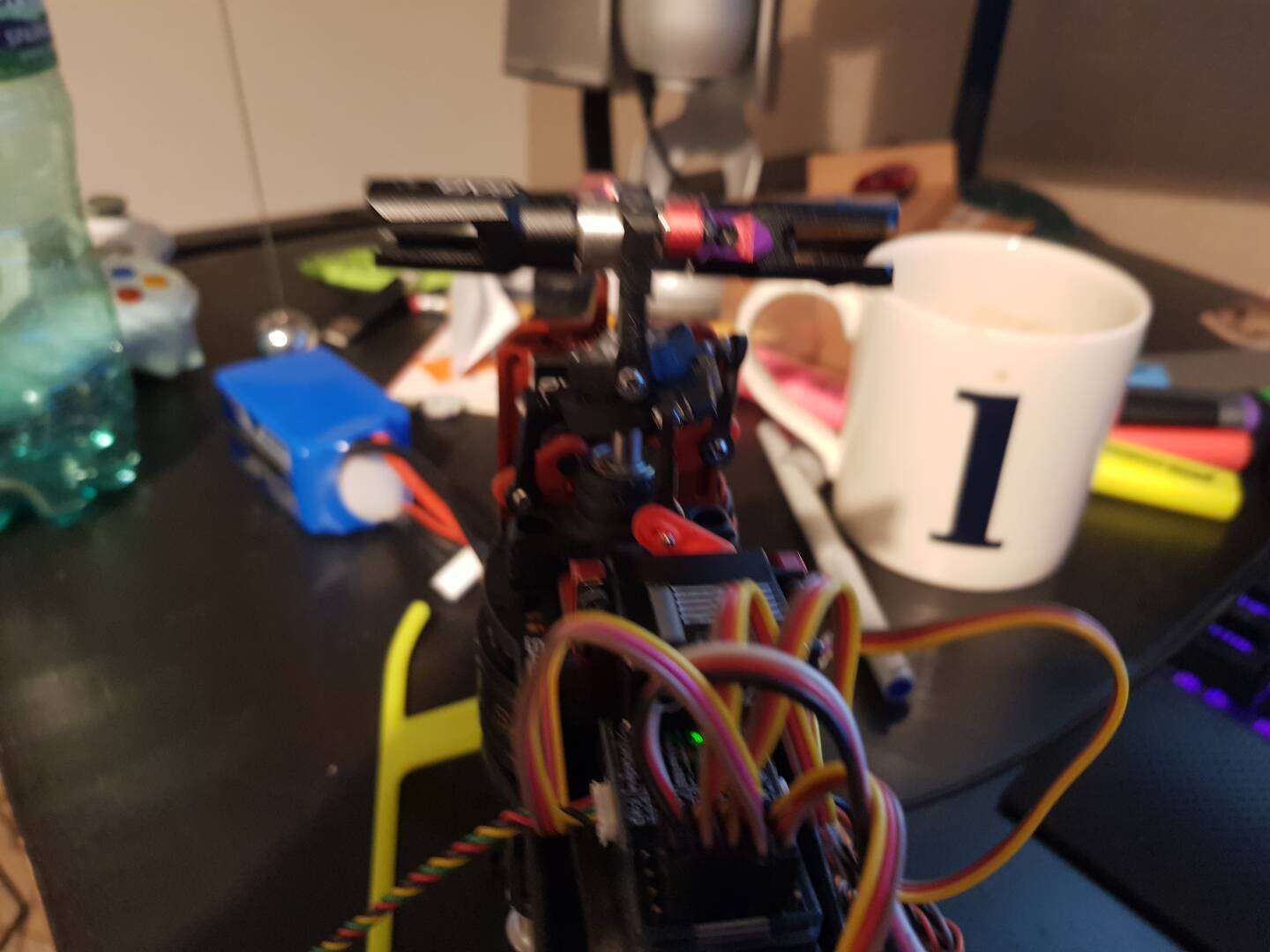
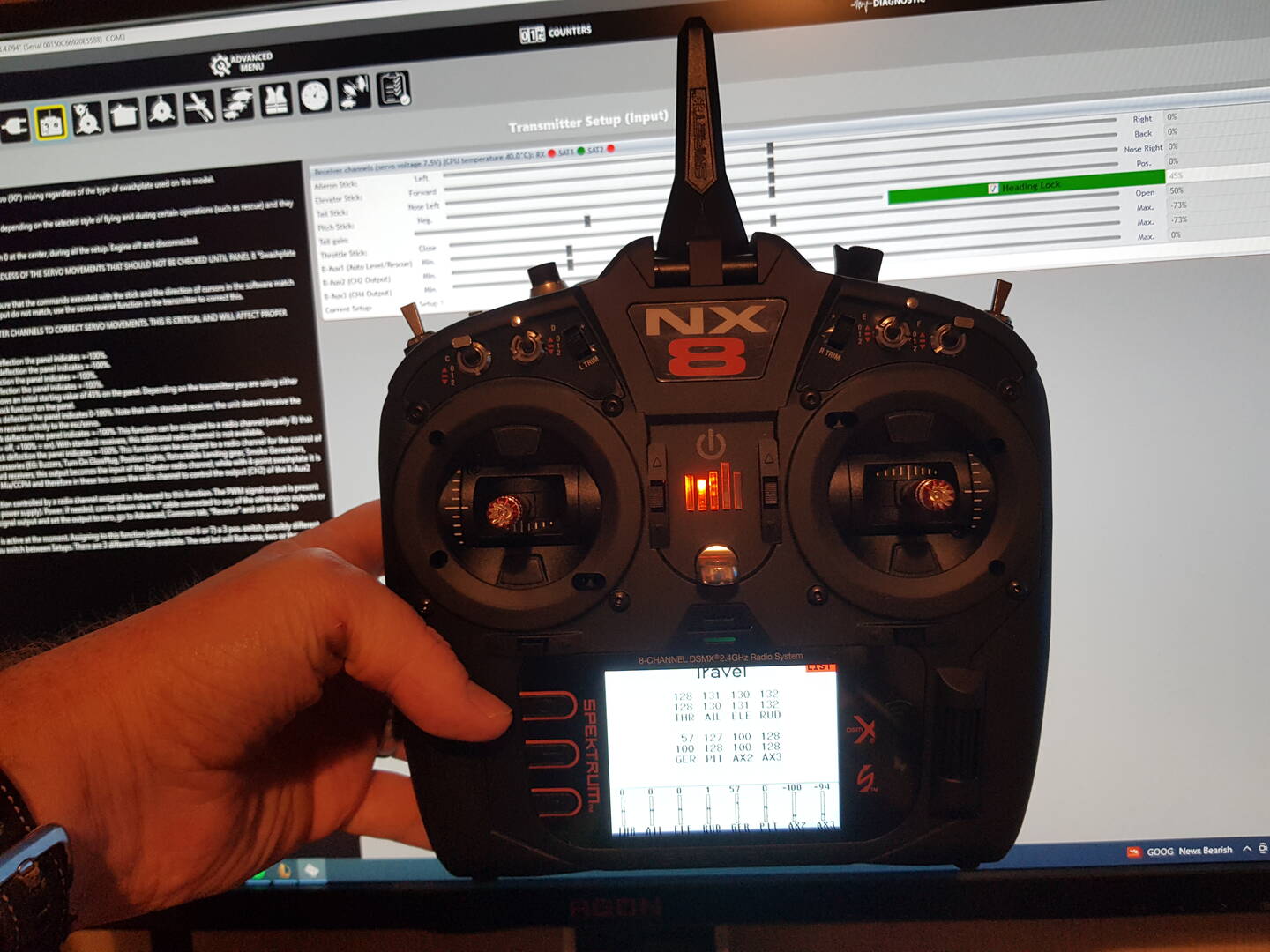
Servo 3 needs to be reversed, but when it is reversed then it's position is completely out of line with the other two servos and look like it extends beyond sensible travel when I put pitch back to -100%.
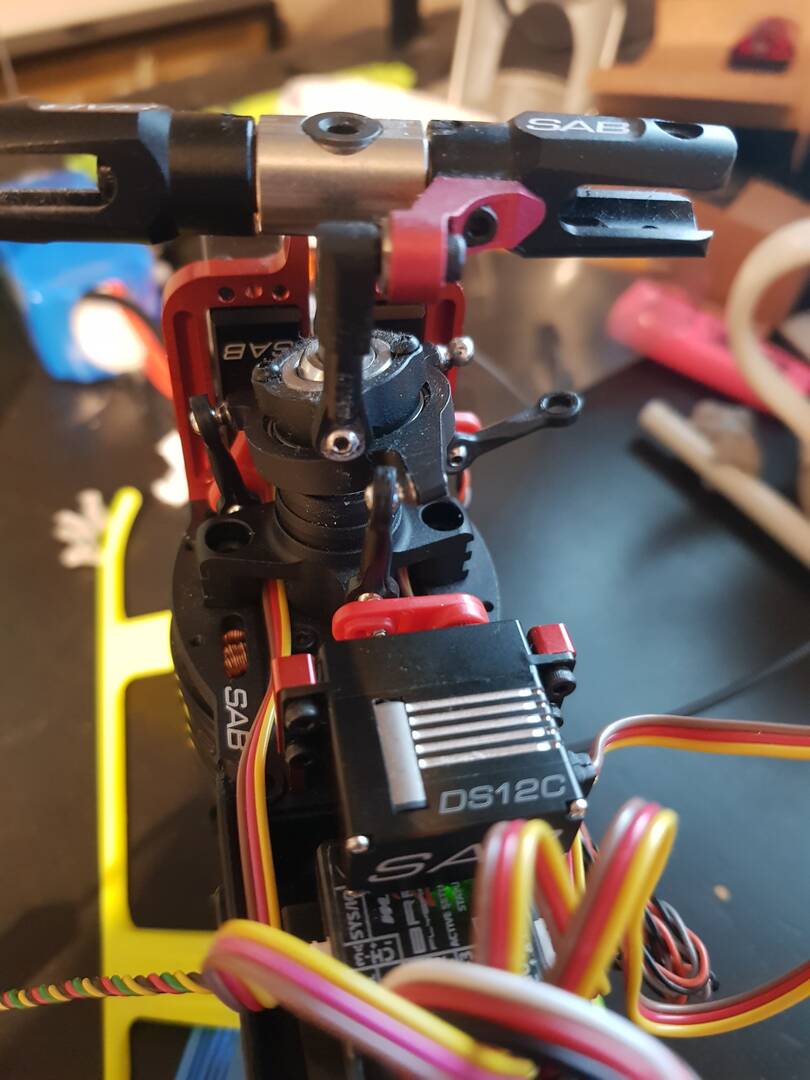
I have used a TURNIGY CCPM Servo Consistency Master to setup the servo mid points before installing them into the heli, as per screenshot you can see this puts the servo correctly at 90.
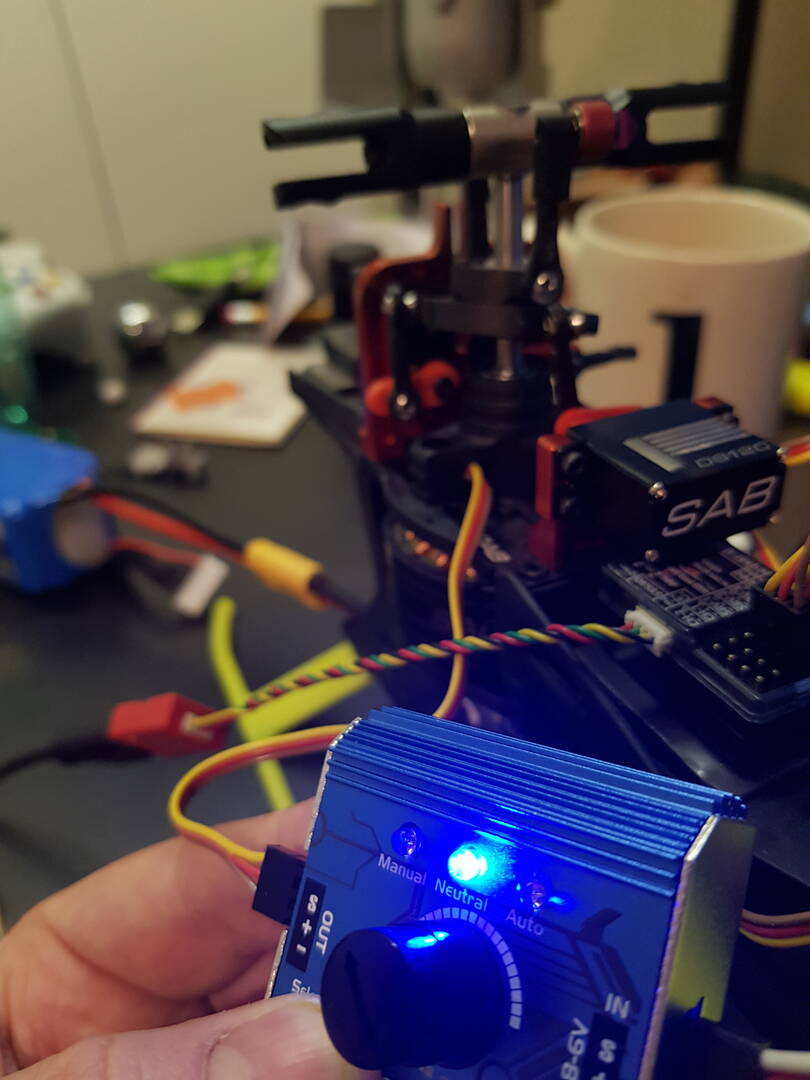
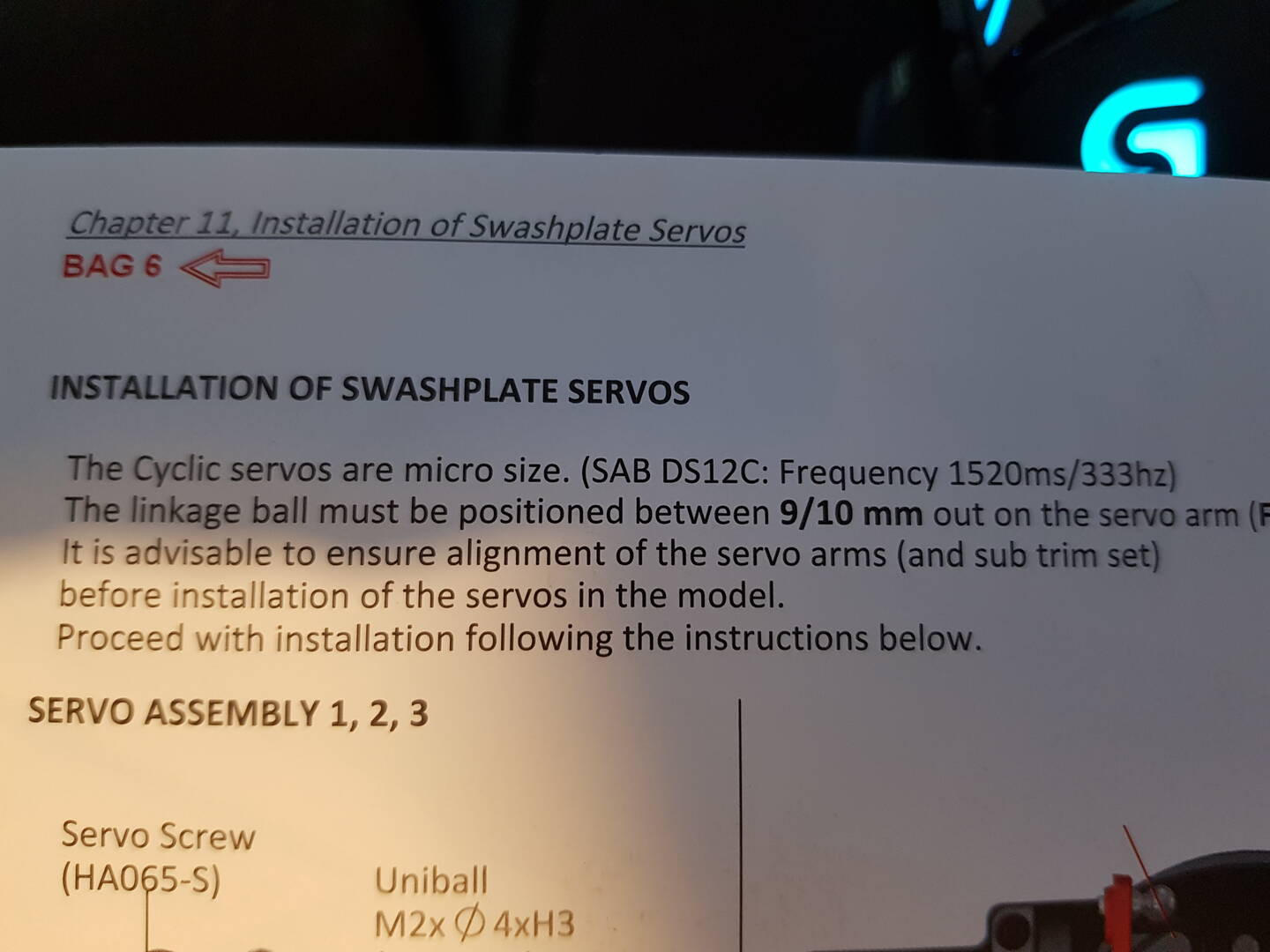
This also shows a sensible full positive and negative travel of the servos from this neutral point. I thought I'd include the goblin manual stating the CCPM width/frequency of the servos which I assume the configuration file shows is 1520us and 333Hz.
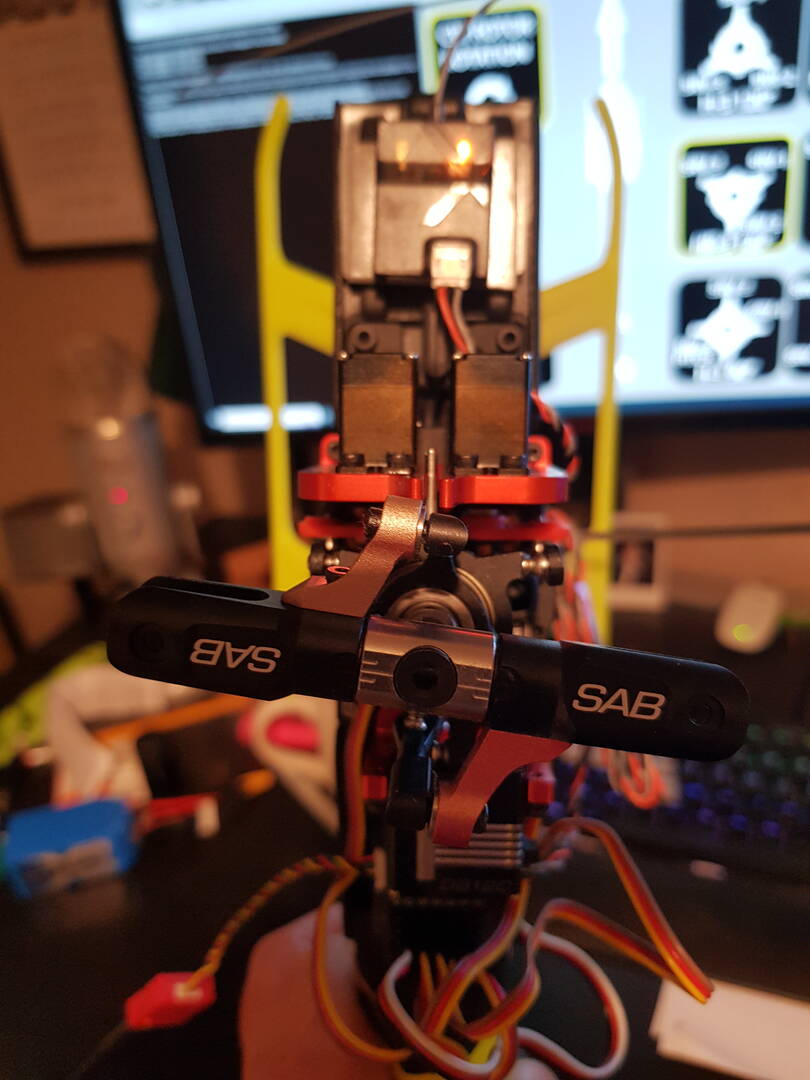
I also include the top down picture of the swashplate to show that I believe this is an HR3 120 type.
I'm not sure if it's relevant but the RX is plugged directly in as a satellite instead of having a separate receiver. Please could someone advise as to what I've done wrong in this setup. Should I not have used the TURNIGY server tester to configure the servos? Is there another step in the configuration wizard that I've messed up. I'm a bit stuck for now...
Thanks in advance.
Liam

It is all already explained in the instructions which should be read completely and over and over again until they are completely clear.
Be that as it may, below I reiterate the points where users make mistakes most often.
First you must be sure that you have not activated any CCPM mixer on your transmitter (when moving the collective pitch stick, in panel 5 of the Wizard, only the "Pitch stick" cursor must move. If other cursors also move, it means that you have activated a CCPM mixer in the transmitter which must be deactivated).
Second important thing to know is that during initialization, the flight controller reads the values of the channels controlled by the self-centering spring sticks (elevator, aileron and tail) and uses the value read as a new central zero to compensate for any consumption and wear of the resistive layers of the potentiometers. It is therefore absolutely essential never to move the transmitter sticks until the initialization of the flight control unit is completed by interrupting the alternation of the red and green LEDs and carrying out the four movements of the servos (also the model must not be moved at all because during initialization the central values of the three gyroscopes are also read and set).
Thirdly, the reverse of the servo movements must absolutely not be done by the transmitter.
Transmitter channel reverse must be done so that the input signals displayed by the cursors in panel 5 of the Wizard move in panel 5 as expected INDEPENDENTLY OF THE MOVEMENT OF THE SERVOS !!
As explained in the instructions, the movement of the servos must be corrected by inverting the output signals (and absolutely never modifying the input signals) bringing the collective pitch stick to maximum and pressing the "Servo Reverse" button on the relative panel 8 several times to the outgoing signals, until the swashplate is positioned horizontally at the top.
@customercare Thank you so much for your swift response. I have indeed seen those parts of the wizard's instructions and have double checked them all:
1. CCPM mixer: all the mixers are inhibited and swashplate type was set to "normal" which I understand is spektrum's equivalent of what brain describes as "basic one servo 90". The Transmitter Setup (input) screen all seemed to work fine, with each TX movement corresponding to exactly one cursor movement. I needed to use the servo reverse on the transmitter for the elevetor and tail channels so that the cursor movements matched with those of the TX. This is what the brain instructions says to do.
"when moving the collective pitch stick, in panel 5 of the Wizard, only the "Pitch stick" cursor must move". If I've read the guide correctly, the throttle and pitch cursors would move together when moving the pitch stick. Is this not the case? I've come to this conclusion from the statement "Note that with the standard receiver the unit doesn't receive the throttle signal because the throttle signal goes from receiver directly to the esc/servo"
2. I have re-checked that the initialisation phase completes fully with no TX or model movements. After this is completed the servos remain in the same position unfortunately.
3. Sorry I wasn't very clear in my original message, I am doing the servo reverses in the wizard and not in the transmitter. I have cycled through "Servo Reverse" on panel 8 and none of the configurations puts the swashplate at the top, however I am fairly confident from the pictures and the way the heli is setup that servo 3 is the one that should be reversed. When servo 3 is reversed, it looks like in my picture above with that servo at a completely different position to the other two when pitch is at 0.
It is normal that when a servo is set to maximum or minimum by performing signal reverse, the servo horn will move to the opposite position.
On the other hand, when in panel 5 the collective pitch signal received from the transmitter is zero, by performing servo reverse, the servos should not change their position (or they might change their position very little if they were servos with central point set to 1500uS instead of 1520us).
If a servo (in your case servo No. 3) moves a lot from its central position, it means it is programmed wrong.
You can check if the problem is with your servo No. 3 by swapping it with one of the other two servos and see if the problem moves along with the servo or always stays on the servo connected to output No. 3.
If this check confirms that the problem is with your servo (the one currently connected to output #3), then you should check whether your servo can be reprogrammed by reprogramming its center position. In case the center position of your servo cannot be reprogrammed, then you should ask for its replacement from the shop who sold it to you if it is still under warranty otherwise you will have to replace it with a new one.
Hi,
Today I received a standard receiver and decided to test the servos with the mini brain 2 unit taken out of the equation. With this receiver I still found all three servos to be not centred. I assume this means there's something wrong with the TURNIGY servo tester I got. I used this receiver to centre the servo horns and finally reconnected the mini brain and reversed servo three and everything looks good.
Thanks for your helpful replies, they've got me on the right track.
We are glad to hear that you have solved it.
For future reference, however, remember that for positioning the swshplate servo horns at 90° to the main shaft, it is wrong to use additional devices such as the TURNIGY CCPM Servo Consistency Master or to connect the servos to the outputs of a receiver, as it is totally unnecessary.
Instead, just go to panel 8 of the Wizard where, as explained in the instructions, the Check Mode function keeps the swashplate servos centered even when the collective pitch stick is not perfectly centered and at zero and follow what is explained in the instructions for positioning the swashplate servo horns.